
Orange County Heat Pump Water Heater Installation
We install heat pump water heaters all over Orange County. Our licensed team makes sure that every installation goes smoothly.
You’ll get a system that fits perfectly, works well, and cuts your electric bill by 50–70% (and sometimes more). You can also qualify for all available rebates and federal tax credits, and it will provide reliable hot water all year long. We’ll install it with as little disruption as possible and guarantee our work.
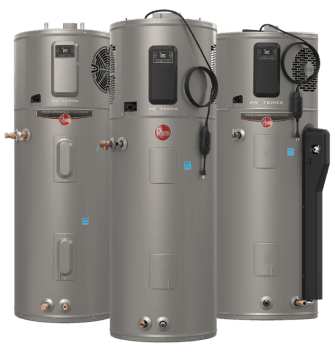
Why People in Orange County Trust Us to Install Heat Pump Water Heaters
✅ Family-owned and fully licensed and insured since 1976— five decades of proven dependability.
✅ We are factory-trained and re-certified every year on all major heat pump water heater brands, including Rheem, A.O. Smith, Bosch, Bradford White, and others. This means that your installation will be done right the first time, every time.
✅ We are Tech Clean California Certified and can guide you through receiving up to $4,300 in incentives.
✅ We cover all of Orange County and know the permit process, local codes, and what each inspector looks for in every city. There are no delays or red tags.
✅ We will come to your home and check out your electrical panel, daily hot water needs, and space to make sure a heat pump water heater is the best choice for your family.
Our Heat Pump Water Heater Installation Process
- Free On-Site Evaluation: We begin with a visit that costs nothing and has no strings attached. We’ll figure out exactly how much hot water your family needs, check the size and airflow requirements, look at the electrical panel capacity (120V or 240V), check the condensate drainage, and make sure that the heat pump water heaters in Orange County meet all seismic and building code requirements.
- Custom Heat Pump Recommendation: We’ll suggest the best size and model (Rheem, A.O. Smith, Bosch, Bradford White, etc.) for the best efficiency and rebates, or we’ll tell you right away if a heat pump water heater isn’t the right choice for your home (for example, if you don’t have enough space, your electrical system can’t handle it, or you need a lot of hot water).
- Transparent Flat-Rate Quote: You’ll get one price that includes the heat pump water heater, the removal and recycling of the old unit, permits, any electrical work that needs to be done, the condensate drain, seismic bracing, pipe insulation, and full building code compliance.
- Installation: We get the permits, do the installation according to code, and set up the city or county inspection. We finish most jobs in half day or less.
- Post-Installation: We’ll show you how to save energy, connect the Wi-Fi app and smart controls, go over the full factory warranty and our labor guarantee, and show you the few easy steps you need to take to keep your system running well for more than 20 years.
What is a Heat Pump Water Heater?
A Heat Pump Water Heater (HPWH), also known as hybrid electric water heater or air-source heat pump (ASHP) water heater, is an electric water heater that is very efficient and uses about 30% to 50% less electricity of a regular electric water heater. It works like a refrigerator in reverse: instead of burning gas or using electric coils to heat water directly, it pulls free heat from the air around it, concentrates it with a small compressor and refrigerant, and then moves that heat into the water tank.
Pros & Cons of a Heat Pump Water Heater
In Orange County, where the weather is perfect all year round, a heat pump water heater is cheating on efficiency: it cuts your bill by 50–65% compared to the tankless gas you have now and soaks up all the sun at noon. An 80- or 120-gallon HPWH is a great choice for us locals because we have a lot of sunshine and cool temperatures.
Pros of a HPHW
- Lower Utility Bills: A heat pump water heater uses 50–70% less energy and costs less than the best electric gas water heaters.
- Green Benefits: Reduces CO₂ emissions.
- Thermal Battery: Stores usable heat in a tank that holds 80 to 120 gallons for solar or off-peak shifting.
- Endless Hot Water Feel: Units that are the right size and have a mixing valve never run out of hot water.
- Free Dehumidification: Takes out 1–2 pints of water from garages every hour.
- Big Discounts: Up to $2,000 in Federal tax credits, and Southern California Electric (SCE) will pay $1,000 for replacing electric and $3,100 for replacing gas.
- Longer Life: A heat pump water heater typically lasts 15–20 years (often with a 10–12 year warranty), compared to 8–12 years for a standard gas or electric tank.
Cons of a HPHW
- Higher Upfront Costs: This could change based on tax credits and rebates.
- Needs Air Space: To work well, it needs at least 700 to 1,000 cubic feet of air space (or ducting) around it to pull heat from.
- Bigger Footprint: These take up more space than tankless ones, and if you’re replacing a traditional tank, it’s best to go up a size or two which means you may need more space.
- Slower Recovery: It takes two to three times longer to reheat than other types of water heaters.
- Cold Weather Dip: Efficiency goes down in unheated garages, but this isn’t as much of a problem in Orange County, where it’s warmer.
- Noise Level: If the compressor is close to where people live or sleep, it can be loud. Some people compare the sound to a dishwasher or a refrigerator.
- Install Hassles + Additional Costs: May need a 240V circuit, electrical work, a panel upgrade, a condensate drain, and sometimes ducting.
- Repair Costs: A broken compressor after the warranty ends is expensive.
- Undersized Regret: Units with 50 gallons or less of water run out of hot water quickly.
HPWH Electrical Requirements
Most electric heat pump water heaters require a 30-amp 240v dedicated circuit. There are smaller models that only require a 15-amp 240v dedicated circuit while even smaller models can run on a standard 120v outlet.
Whether you need a 120v or 240v HPHW model all depends on how many people are in your family and how you use hot water. A 120V plug-in model can work for up to 1-4 people, installs with a standard outlet, and provides hot water all year round in Orange County’s mild climate. A 240V model, on the other hand, heats water twice as fast and has backup elements for larger families (4+ people) who never want to risk a cold shower, even on the rare cooler evenings. Most 120v models, also known as a plug-in heat pump water heater, still need a dedicated 20 amp circuit so simply plugging into standard outlet may not work, and may require electrical work.
During our free on-site evaluation, we’ll look examine your needs and suggest the best model for your home. You won’t need to make any electrical upgrades unless they really make sense.
Heat Pump Water Heater Maintenance
Taking care of a heat pump water heater is about the same as taking care of a regular electric or gas tank (just cleaning the filter and checking the anode every once in a while), but it’s much easier and cheaper than a tankless unit, which needs to be descaled and flushed by a pro every year and costs hundreds of dollars.
It only takes 10 to 15 minutes a year to take care of your heat pump water heater. Just clean or replace the air filter every 6 to 12 months and check the condensate drain. These two simple steps, along with checking the anode rod every 3 to 4 years, will keep your unit running at its best for 18 to 22 years or more.
Bottom Line in Orange County
A heat pump water heater is a great choice if you live in Anaheim, Villa Park, Irvine, Fullerton, Newport Beach, or anywhere else in the county. It usually cuts your hot-water bill in half and pays for itself the fastest with the rebates and tax credits that are available today.
That being said, it’s not always the best choice for every house. Some larger families, homes with unique layouts or requiring electrical upgrades, may be better off with a traditional tank, tankless or another option. We’ll come to your house for a free look at your electrical setup, hot-water habits, and space, and then tell you which system makes the most sense. No guessing, just the right answer for your home.
Heat Pump Water Heater Incentives

Save now with Tech Clean California’s rebates when you switch from a standard or tankless water heater to new heat pump water heater!*
Market Rate (when tenant’s income does not qualify):
- Orange County incentive ranges from $1,100 to $4,300 per unit
Equity (when tenant’s income qualifies):
- Incentives range from $3,500 to $5,700, per unit
*Rebate offers and eligibility subject to change. Equipment must be Energy Star listed.
Contact us for the most up to date rebate information, requirement details, and to find out if you qualify.
We are a Tech Clean California participating plumber that specializes in heat pump water heaters.
Frequently Asked Questions
What are the best brands to consider for heat pump water heater replacement?
The best brands for a heat pump water heater replacement depends a lot on household needs, budget, space, climate, and priorities like noise level or smart features. Leading heat pump water brands include Rheem, Bradford White, A.O. Smith, and LG.
Why don’t plumbers like heat pump water heaters?
A lot of plumbers don’t know how to work with these systems and tend to prefer to stay with what they know. Plumbers need special training to install and repair these units, just like they do with regular tank or tankless systems. Additionally, some homes also need expensive electrical upgrades, which can make other types of water heaters better options.
What is a thermal battery?
The hot water tank itself acts as a thermal battery by overheating the tank (up to 160–180 °F in some models) when electricity is cheap or solar production is high that can be drawn down over hours or even a full day without turning the compressor back on.
What is a mixing valve?
A device installed on a heat pump water heater (or any water heater) that mixes cold water with the hot water coming out of the tank so that the water delivered to your faucets and showers is at a desired temperature, even though the water inside the tank is stored much hotter.
What is heat pump only mode?
HP-only mode (Heat Pump Only mode) is an operating setting on heat pump water heaters (HPWHs) that forces the unit to heat water using only the heat pump compressor and disables the electric resistance (backup) heating elements completely. This 3-4x lower efficiency lowers electrical costs.
Do you need to go up a size when considering a heat pump water heater?
Yes, you should generally go up one size or two on a HPHW because a mixing valve decreases usable hot water and high usage can cause the higher electrical cost resistance elements to kick on. A bigger tank size means high-efficiency heat pump mode is used more.
Do you need 240v unit or will a 120v unit work?
It depends on your needs including the size of your family. 120V units heat slower (less electrical power) and lack backup heating elements needed for heavy use.
Does a bigger-gallon heat pump water heater use less energy?
Most always a bigger tank will use less energy because a smaller tank can run out of hot water and and start using electricity to heat water. Additionally larger tanks lose less heat from storage. Bottom line bigger is almost always more energy efficient than smaller.

Over 49 years experience in plumbing